
You’ve built your fintech platform to be fast, convenient, and trustworthy. But deep down, you know the threats are evolving faster than your defenses. Every week, there’s another headline about stolen financial data, phishing attacks, or hackers draining accounts. StrongDM’s latest report states that Zero-Trust adoption is already mainstream, with budgets climbing fast.
The stakes are higher for you because you’re not just protecting passwords. You’re safeguarding people’s life savings and trust.
Here’s the uncomfortable truth: Even one slip, for instance, a careless click from an employee, a compromised third-party tool, or a missed security update, could leave your system wide open. And in fintech, a single breach isn’t just a technical problem; it’s a trust crisis that can cost millions and permanently damage your reputation.
If that thought makes your stomach turn, you’re not alone. The smartest players in fintech are already rethinking security from the ground up.
This is where Zero-Trust Security comes in.
Zero-Trust Security in Fintech: What It Means in Plain English
Zero-Trust is a simple yet powerful idea: trust no one and verify everyone.
It means no user, device, or app gets a free pass, even if they’re inside your network. Every login, every request, and every connection is verified before access is granted.
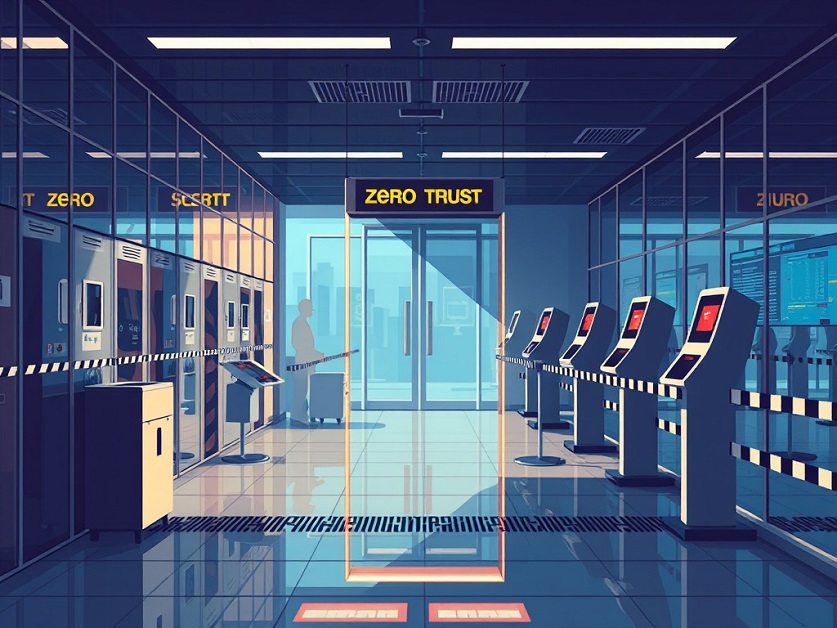
Think of it like airport security. Even staff with ID badges still go through checks before entering restricted areas. Zero trust works the same way for your digital environment. It locks the door at every step, making it harder for attackers to move around and steal data.
Why Zero-Trust Security is Crucial for Fintech Companies
Fintech companies handle some of the most sensitive data on the planet. That makes you a top target. Hackers know your platform is linked to high-value transactions, personal information, and customer identities.

With traditional security, once someone got inside your network, they often had free movement. That’s why breaches could go unnoticed for months.
Zero trust changes the game. Even if a hacker breaks in, they can’t move freely. Every step triggers new checks and verifications. This limits damage and stops attacks before they spread.
Industry forecasts suggest that by 2025, 60% of companies will choose Zero-Trust over VPNs, and this shift could cut potential breach losses by up to $1 million. For fintech, that’s not just an IT win, it’s a business safeguard.
Common Security Gaps That Zero Trust Fixes
- Insider threats – Not all threats come from strangers. Disgruntled employees or careless staff can be just as dangerous. Zero trust limits each employee’s access to only what they need. For instance, a customer service rep can view account details but can’t download large datasets. This stops misuse, whether intentional or accidental.
- Third-party risks – Vendors and partners may connect to your systems. Zero trust ensures their access is limited and constantly monitored. An IT contractor can fix a system, but can’t view financial records. All actions are tracked to prevent abuse.
- Remote work vulnerabilities – With more teams working from anywhere, device security can be unpredictable. Zero trust checks every device, every time, before granting access. If an employee’s personal laptop is outdated or infected, it’s blocked until it’s secured. This keeps unsafe devices out of your network.
- Phishing attacks – Even if login details are stolen, extra verification like multi-factor authentication makes them useless to attackers. For example, a login attempt triggers multi-factor authentication, making stolen credentials useless without the second step.
How to Implement a Zero-Trust Framework in Your Fintech Business
You don’t have to rebuild your system overnight. Start with these steps:
1. Identify critical assets
List the systems and data that would cause the most damage if exposed. Prioritize customer PII, payment gateways, transaction logs, and APIs: Map where they live and who touches them.
Example: Treat your payment gateway and transaction database as top priority. Put them on a segmented network requiring encryption and strict admin controls.
2. Verify every user
Require strong proof of identity for everyone. Use multi-factor authentication and single sign-on with conditional checks. Add stricter checks for sensitive actions.
Example: Force MFA for all staff. Ask for an extra authentication step when someone requests a large funds transfer.
3. Verify every device
Only allow devices that meet security rules. Use device management to check OS versions, patches, antivirus, and disk encryption. Block or quarantine devices that fail checks.
Example: Allow only company-managed laptops with disk encryption and the latest patches. Block access if the antivirus is missing.
4. Use least-privilege access
Give people only the rights they need to do their job. Use role-based or attribute-based access and time-limited elevations. Revoke access when roles change.
Example: A support agent can view an account but cannot export transaction data. Give database admin rights only for a fixed maintenance window.
5. Monitor and respond in real time
Log all access and actions. Use tools to detect unusual behavior and trigger automated responses. Have a playbook for investigation and containment.
Example: Alert on logins from new countries or many failed attempts. Automatically lock the account, notify the security team, and start the incident playbook.
These steps cut risk and make your fintech platform much harder to break into.
In fintech, trust is your currency. Lose it, and the damage can be permanent. Zero-Trust Security isn’t just a tech upgrade. It’s a business survival strategy.
The Zero-Trust market is already valued between USD 19.2 billion and USD 34.5 billion in 2024, with an expected annual growth of over 16%. Regulators are taking notice, too. The Reserve Bank of India recently urged financial institutions to adopt Zero-Trust frameworks to counter AI-driven and cloud-based threats.
Cyber threats aren’t slowing down, and customers are becoming more aware of security risks. By adopting zero trust, you send a clear message: your customers’ data is safe with you. The companies that act now will be the ones customers trust tomorrow. The question is: Will you be one of them?
 SEO with Maryanne